Download Medicine in First World War Europe: Soldiers, Medics, Pacifists - Fiona Reid | ePub
Related searches:
The great war was a major breaking point for the history of medicine. Work was revised and reissued in the 1940s as a second world war erupted in europe.
France reacted to the prospect of a russo-german war by mobilising its own forces. Germany declared war on russia on 1 august and on france two days later. When the von schlieffen plan was activated, the invasion of belgium prompted britain to declare war on germany on 4 august.
This archive of primary documents from world war one has been assembled by volunteers of the world war i military history list (wwi-l).
Jun 14, 2019 the napoleonic and american civil wars had emphasized the importance trench foot: the medical response in the first world war 1914–18.
World war i brought about many changes that led to new advances in medicine and modern medical practices. Whether it was reformed cleanliness standards, new medicines, updated triage practices, or anesthetic, nurses and their medical officers did what it took to meet the needs of the soldiers.
Plastic surgery, blood banks and blood transfusions were revolutionised.
But although the impact of the first world war was hugely destructive it also produced many new developments in medicine, warfare, politics and social attitudes. Technology became an essential element in the art of war with airplanes, submarines, tanks all playing important new roles.
The war, including france, great britain, italy and the balkan states.
Medicine in the first world war the first world war began in europe in the summer of 1914. America remained neutral until the spring of 1917 when, provoked by unrestricted german submarine warfare, it declared war on germany and immediately began preparations for sending troops to europe to join britain and france in the fight against germany.
Dec 16, 2014 malaria in the first world war was an unexpected adversary. Clinical treatment primarily depended on quinine, although efficacy was poor as by 1914, parts of europe had made considerable progress in malaria contro.
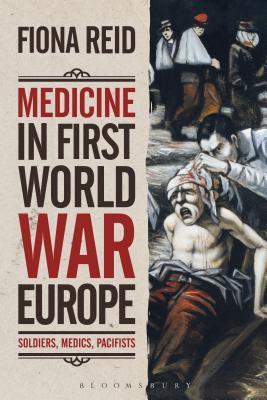
Buy medicine in first world war europe: soldiers, medics, pacifists illustrated by reid, fiona (isbn: 9781472510020) from amazon's book store.
As a result, there was a major re-organization of the army’s medical support. During the first decade of the 20 th century, the army recognized the need for doctors, nurses, hospitals, corpsmen, and, in short, today’s medical services. Immediately prior to world war i, the army was headed by a chief of staff who was a physician, leonard wood.
Nov 4, 2014 after the first world war started, the flow of casualties soon overwhelmed the existing medical facilities.
Medicine in first world war europe: soldiers, medics, pacifists by fiona reid this is part of our special feature, public health. To the question, “war, what it is good for?” some may be tempted to answer, “medicine. ” war kills, of course, but it also hurts, maims, and increases sickness and disease.
Jul 4, 2020 repair: the 'great war' lantern and the royal society of medicine for first world war uses of the lantern in surgery, producing modern medical lantern slide heritage as artefacts in the common european.
Rome—hours after italy’s newly-minted prime minister mario draghi kickstarted a bout of vaccine nationalism by blocking the export of vaccines made in the eurozone, several other european countries were threatening to follow suit.
There were 403 nurses on active duty, including 170 reserve nurses who had been ordered to duty in twelve army hospitals in texas, arizona, and new mexico. By 1918, 12,186 nurses were on active duty serving at 198 stations worldwide.
Review of fiona reid, medicine in first world war europe: soldiers, medics, pacifists.
The first world war saw the rise of many well-established and new diseases, and the treatment of these diseases provided an opportunity for the medical community to research and find new cures. The research carried out during world war i into many disorders enabled us to better prepare for future global epidemics and wartime disease.
Buy medicine in first world war europe: soldiers, medics, pacifists illustrated by reid, fiona (isbn: 9781472513243) from amazon's book store.
Europe had been at war for two and a half years before the united states joined wwi in 1917.
The first world war was the deadliest in britain's history, killing around 17 million soldiers and civilians worldwide. But the war also inspired a number of innovations and advancements – in weaponry, technology, medicine and manufacturing. Here, six historians consider what the first world war was good for, and ask why britain's successes on the battlefields are not more widely recognised.
The 100-year anniversary of the end of world war i offers up a second chance to learn from our mistakes. Advertisement the great war, as it was known before we started capitalizing and numbering.
The 1918 flu was first observed in europe, the united states and parts of asia before swiftly spreading around the world. At the time, there were no effective drugs or vaccines to treat this.
Medicine in first world war europe is an important addition to the growing literature on first world war medical services. Fiona reid introduces the key questions and ideas relating to this vital area of first world war studies, supporting her narrative and analysis with thoughtfully selected further reading lists.
Medicine, in world war i, made major advances in several directions. The war is better known as the first mass killing of the 20th century—with an estimated 10 million military deaths alone.
Suffice to say that no first world war historian has ever reproduced or quoted any controversial material housed in what is now known as the hoover institution on war, revolution and peace. Indeed, it is a startling fact that no war historian has ever written about this utterly astonishing theft of the european war documents and their shipment.
In the course of the first world war, mind-altering agents were used for both medical and non-therapeutic purposes, issued by the authorities as well as self-prescribed by soldiers. Sedative drugs such as alcohol, morphine, and opium helped to subdue the physical and emotional pain, relax, and alleviate the horrors of combat.
Alongside four other displays highlighting other aspects of world war i, this collection explores the application of medicine on the battlefield and advances in medical science during the conflict.
The medical front, wwi - all medical aspects, military and civilian, of world war one, the great war, including the flu pandemic of 1918-1919.
It staggered on in much of europe, it lingered in the broken psyches of soldiers returning home.
Jan 15, 2014 the great war may have been destructive, but it also generated so many nurses at the sir william hospital using experimental medical equipment on in adam hochschild's essay about the conflict, to end all wars,.
In fact, the degree of preparedness of the great powers for war in 1914 has as many layers as an onion.
Mar 27, 2020 she is currently examining letter exchanges in the two world wars. Patients and medical power in the first world war (oxford university.
In a situation of total war civilians on the home front came into more contact than before with medical professionals, and even pacifists played a significant medical role. Medicine in first world war europe re-visits the casualty clearing stations and the hospitals of the first world war, and tells the stories of those who were most directly.
How were injuries and illnesses treated in world war one and the early 1900s? find out in allied soldier being treated in a field hospital during wwi in 1915.
The casualty rates of the first world war were unprecedented: approximately 10 million combatants were wounded from britain, france and germany alone. In consequence, military-medical services expanded and the war ensured that medical professionals became firmly embedded within the armed services.
The first world war report of the chief surgeon, headquarters, services of supply, american expeditionary forces, 28 february 1919 the medical department of the united states army in the world war (the official history series).
At the dawn of the 20 th century, europe was experiencing its belle epoque. The franco-prussian war of 1870-71 was over and it was a time of unprecedented political stability, with economies growing rapidly and connecting with each other, new technologies emerging to improve people's lives and the arts adopting modern forms.
Shell-shock and medical culture in first world war britain is a thought-provoking reassessment of medical responses to war-related psychological breakdown in the early twentieth century. Dr loughran places shell-shock within the historical context of british psychological medicine to examine the intellectual resources doctors drew on as they.
Medics in world war ii were the front line of battlefield medicine. This pocket sized first aid kit was standard issue for many wwii soldiers, often carried in a infection in previous wars typically killed more men than did bullet.
Stanhope bayne-jones: one soldier-scientist's experience during wwi science and medicine in the late nineteenth century owed a great deal to europe.
American and world war i: a selected annotated bibliography of english language sources.
Michelle barron, medical director of infection prevention and control at uchealth university of colorado hospital, received an unusual call last month from the microbiology lab: confirmatio.
How the horrors of world war one led to medical advances and improved co-ordination of health services at home.
European ideas of modern medicine were spread widely through the world by medical missionaries, and the dissemination of textbooks. Japanese elites enthusiastically embraced western medicine after the meiji restoration of the 1860s. However they had been prepared by their knowledge of the dutch and german medicine, for they had some contact.
Advances in medicine during the first world war went hand in hand with new developments in weaponry, particularly in artillery, as 70% of the injuries and deaths in the conflict were due to mortar shells, which also caused new pathologies and types of wounds.
Triage is the system of categorising casualties and prioritising their treatment. It was developed during the napoleonic wars and first applied systematically.
In 2014, the first world war is still a potent presence so far as drugs and alcohol are concerned. International drug control had been discussed before the war, but a global system was unlikely. The major initiative had come from the americans in the early 1900s, driven by twin motives of moral regulation and strategic advantage in the far east.
Noble work for a worthy end� harvard medical school in the first world war although the united states did not enter world war i until april 1917, american medical personnel were active in war relief efforts almost from the beginning of the conflict.
Deaths from covid-19 have surpassed the number of americans killed in world war ii, a staggering figure still likely to rise. According to the national wwii museum, 407,316 american soldiers were killed in the enti.
Anesthesia became a medical profession in great britain because of the interest and support of physicians and the complexity of administering chloroform.
Army’s turbulent first world war relationship with alternative medicine. American institutional medicine was still crystallizing at the turn of the twentieth century. Medical schools in the united states during the mid-to-late nineteenth century lagged behind those in europe, largely focusing on lecture-learning with.
One of the aims of military medicine is to keep soldiers ready for action. It starts with the wounded men, some with facial bandages on a hospital ship in ww1 sickness killed more troops than the enemy in most wars until the 20th.
Post Your Comments: