Download Cultural Sustainability and the Nature-Culture Interface: Livelihoods, Policies, and Methodologies - Inger Birkeland | PDF
Related searches:
Cultural Sustainability and the Nature-Culture Interface
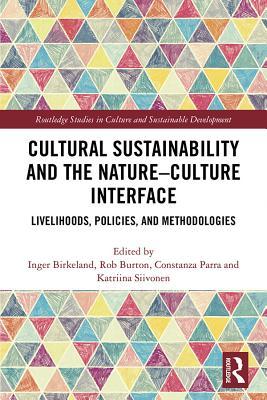
Cultural Sustainability and the Nature-Culture Interface: Livelihoods, Policies, and Methodologies
Cultural Sustainability: Perspectives from the Humanities and
Culture and Sustainable Development General Assembly of the
Cultural Heritage and the Challenge of Sustainability
Exploring the socio‐cultural sustainability of old and new housing
Cultural Sustainability and the Negotiation of Public Space - The
Cultural Sustainability and the Nature-Culture Interface - Inger
Culture and sustainable development: the key ideas United
Isabel Dulfano on Good Life, Cultural Sustainability, and the
Cultural Sustainability and the Nature–Culture Interface
Culture and Sustainability: Environmental Anthropology in the
Is Resale Culture The New Sustainability?
Creating and Sustaining an Innovation Culture edX
Sustainability in Tourism: The socio-cultural lens
GLOBAL AND CULTURAL SUSTAINABILITY.docx - Culture refers to
Culture in, for, and as Sustainable Development - Conclusions from
Assessing and managing sustainability in international perspective
Cultural Sustainability and Regional Development: Theories and
Sustainable Development - From the Cultural Dimension of
Cultural Sustainability and Regional Development; Theories and
Connecting Culture and Sustainability
Chronicling Cultural Sustainability at the Geographic Center
Social and Cultural Sustainability: Criteria, Indicators
Sustainability in Tourism: The socio-cultural lens - Hospitality Insights
The Importance Of Culture For Sustainability - YouTube
(DOC) Sustainability and Culture: How do they work together
CULTURE IN THE SUSTAINABLE DEVELOPMENT GOALS: A GUIDE FOR
Cultural Sustainability and Who WEBE @GullahGeechee Gullah
Creative workers’ views on cultural heritage and sustainability
Culture and sustainability - Nordisk kulturkontakt
Africa: Engendering Cultural Sustainability for the
Cultural Sustainability in the Creative Surface Design of
Towards a Model for Cultural Sustainability: The Case of Toki
About Center for Cultural Sustainability UTSA The
Intangible cultural heritage and sustainable development; 2015
Field of Creative-Cities Movement and Cultural Sustainability
PhD and MA in Cultural Sustainability – Performing-Sustainability
If tourism is to change and become more sustainable, the aspect of culture must be taken into account. When we speak of culture in tourism it refers to both host and guest cultures. The goal is to create a harmonious sociocultural environment where long-term sustainable relationships are maintained among all the tourism stakeholders.
) program helps graduate students pursue answers to that question by focusing on studying, preserving, and supporting local histories, traditions, and ways of life across societies around the world.
Culture and diversity should be largely considered in the decision-making process of policies and assistance, as it plays a significant role in affecting the international response. Moreover, it is arguably one of the most important factors in the achievement of sustainable development.
Dulfano explained, “cultural sustainability means that we value [cultural] diversity and that we find ways to revitalize, resuscitate, recover, or even just preserve the unique cultures, knowledge, and traditions of all people. ” preservation doesn’t mean a static, essentialized view of ‘traditional’ food, dance, dress, or language.
This book explores the interfaces between nature and culture through the perspective of cultural sustainability. A cultural perspective on environmental sustainability enables a renewal of sustainability discourse and practices across rural and urban landscapes, natural and cultural systems, stressing heterogeneity and complexity.
Cultural sustainability component clearly expresses the aesthetic and socio-human value of the product, represents, basically, the motivation of a purchase decision. Thus, surface design is an interface between material, technology and consumer, being both a scientific and technical interface, as well as a socio-cultural one [11].
The cultural sustainability certifiicate provides undergraduate students and non-degree-seeking students an opportunity to gain a deep understanding of how culture intersects with conceptualizations of sustainability. In one area, we examine why and how we can protect cultural sites and artifacts and what we can learn from the past to help us address current sustainability issues.
For cultural and heritage institutions around the world, sustainability is the major challenge of the twenty-first century. In the first major work to analyze this critical issue, barthel-bouchier argues that programmatic commitments to sustainability arose both from direct environmental threats to tangible and intangible heritage, and from social and economic contradictions as heritage.
The analysis of sustainability is often divided into three main perspectives: social, economic and environmental, (also known as “people, profit and planet”). When talking about the social/people aspect, one could argue that an additional perspective needs to be taken into account - that of culture.
The culture of health framework includes four pillars of societal health and well-being influenced by business, namely: consumers; employees and workers in the supply chain; the community, and the environment. The auto industry was an ideal crucible in which to explore the interface of public health with business given the confluence of the different domains in this sector.
Cultural sustainability only is achieved by the two modes of col- lective memory: archiving the ‘fixed points’ and putting them in a contemporary context to show its relevance. This is what the academic and professional disciplines of preservation tend to neglect.
Cultural sustainability culture is one of the main components of the concept of sustainable development. The need for cultural sustainability arises from the growing awareness of the importance of cultural rights and the preservation of cultural heritage. Some of the major factors that cultural sustainability is based on are:.
Culture helps ensure ecologically sustainable development: culture for sustainable development in this role, culture is primarily considered an instrument that helps to clari-fy and put into perspective the challenges, especially the ecological ones, that the world faces. It is also seen as a tool that can connect and balance the other.
Social changes can be affected by a variety of influences, including exposure to other cultures, available resources, and environmental conditions.
Sustainability and societal change have long been topics of public.
Today, the contribution of intangible cultural heritage to environmental sustainability is recognized in many fields such as biodiversity conservation, sustainable natural resource management and natural disaster preparedness and response.
Cultural sustainability and the negotiation of public space - the case of indrachowk square, kathmandu, nepal.
Home publications culture in, for, and as sustainable development – conclusions from the cost action is1007 – investigating cultural sustainability.
Explicitly recognise in local cultural policies the connections between culture and environmental sustainability, including the sustainable use of resources. Explore the potential of cultural facilities, events and activities as contexts where to raise awareness of water scarcity and sustainable uses of water-related ecosystems.
1 mar 2020 and social benchmarks of sustainability and sustainable development are to be met, ignoring the role of the humanities and social, cultural.
Cultural heritage and sustainability are two en-twined concepts that have found their way into international cultural conservation policies over the past decade. This paper presents a model known asthe ‘‘arts sustainability heritage’’(ash) model, which is designed to help understand the values and actions of creative workers in relation to cultural heritage and sustainability.
Cultural sustainability is not an additional dimension of sustainability but an integral understanding of the whole concept of sustainability: it transforms knowledge about ecological, social and economic problems into a new narrative of progress, quality of life and the position of man in nature.
Cultural sustainability practices support culture without insisting people and practices remain static in their identity. A key concept is sustaining culture through the development of tradition. As each generation makes the tradition relevant to themselves and their generation, transmission is strengthened and culture evolves.
Culture enables environmental sustainability at various levels: through the intrinsic links between cultural diversity and biodiversity, through its influence on consumption patterns, and through its contribution to sustainable environmental management practices as a result of local and traditional knowledge.
If the political and social benchmarks of sustainability and sustainable development are to be met, ignoring the role of the humanities and social, cultural and ethical values is highly problematic. People’s worldviews, beliefs and principles have an immediate impact on how they act and should be studied as cultural dimensions of sustainability.
Cultural sustainability means consideration, understanding and respect for heritage - the identities and values that bind people to places with local, national or ethnic relevance. Cultural systems of human existence concern people and their relationship to places and the built environment.
More than green is a research project on sustainability in the large-scale urban environment – mainly the city and the public space – developed through.
1 jun 2020 social and cultural sustainability concerns issues regarding people's opportunities to fulfil their potential.
The cultural intellectual property rights initiative® supports cultural sustainability and fashion as a form of education and promotion of cultural heritage and traditional cultural expressions.
Cultural sustainability examines ways to enhance our cultural identity and sense of place through heritage, shared spaces, public art, social capital, educational opportunities, and public policies in ways that promote environmental, economic, and social sustainability. The word culture has multiple definitions and layers, as noted by researchers, and the results of my own search for a clear definition were encumbered by such an abundance of differences.
Cultural sustainability is a concept that names a field of inquiry and action that flows from the demands of ethical scholarship and activism and takes seriously both the challenges of cultural work and its necessity in a changing and uncertain world. Neither culture nor sustainability is a transparent or simple concept.
This reflects the considerations of both culture and sustainability scholars to conceptualize culture and sustainability beyond country boundaries. When differences in sustainability practices are accounted for at the cluster level of analysis, the effects of cultural practices on sustainability practices are likely to vary, compared to the country level of analysis.
1 oct 2018 sustainability is generally associated to sustainable development, which is based on the three-pillars model.
28 jun 2019 the holistic approach opted for primarily focuses on conveying aspects of corporate sustainability across different socio-cultural contexts.
Culture has been identified as both an enabler and a driver of the economic, social and environmental dimensions of sustainable development.
Sustainability as cultural way of life second, cultural “ways of life” form the basis of how people interact. A community won’t be able to successfully transition to a more sustainable lifestyle.
Cultural sustainability is often a matter of social justice and self-determination, and knowledge of community organizing strategies provides a critical tool for cultural sustainability practitioners. Organizing, advocacy, and action strategies will be shared and assessed particularly as they pertain to matters of cultural democracy.
Cultural sustainability refers to the preservation of cultural aspects as part of a development plan. Cultural aspects include traditions, language, see full answer below.
Cultural policies for sustainable development: four strategic paths. Now temporarily open access - until the end of october only! the publisher kindly granted.
One simple way that humans can become more sustainable and lower their carbon footprint is to use better insulation with “green” or eco-friendly materials. The culture that most people live can be viewed as the fundamental problem hurting sustainable development.
Cultural sustainability at the center for folklife and cultural heritage, we acknowledge a significant and accelerating decline in cultural vitality. While globalization connects us in new ways, it also threatens the world’s cultural diversity.
Social changes can be affected by a variety of influences, including exposure to other cultures, available resources, and environmental conditions. Some changes may impact the sustainability of a society and the environment on which it depends.
Cultural sustainability and regional development; theories and practices of territorialisation.
The focus of the book on cultural sustainability changes the nature of questions posed in multicultural education from those that address the opening of boundaries to issues of preserving.
Goucher's master of arts in cultural sustainability is a completely unique program. You will learn how to work closely with individuals and communities to identify.
This course examines the interrelated dimensions of sustainability and the concept of sustainable development from the perspective of culture.
In the first representation (“culture in sustainability”), culture is seen as a general process of intellectual, spiritual or aesthetic development, as well as the results of intellectual and artistic work, which can also be called cultural capital in the bourdieusian sense.
The center for cultural sustainability explores the continuity of the cultural systems of human existence. Cultural sustainability includes consideration, understanding and respect for heritage – identities and values that bind people to places. Click here to visit the center for cultural sustainability’s website.
Cultural sustainability, at its heart, is an existential project, and i suggest some methodological and pedagogical orientations to this project in this chapter.
Cultural sustainability as it relates to sustainable development, has to do with the maintaining of cultural beliefs, cultural practices, heritage conservation, culture as its own entity, and attempts to answer the question of whether or not any given cultures will exist in the context of the future. From cultural heritage to cultural and creative industries, culture is both an enabler and a driver of the economic, social, and environmental dimensions of sustainable development.
Some of the earliest efforts at cultural sustainability pertained to religious services, which play an important role in sustaining community values throughout the state. Some services moved to an online format, and some even added radio broadcasts for those who do not use social media.
31 oct 2020 factors related to cultural appropriation were the most prioritised by participants and linked to sustainability.
Cultural sustainability can be regarded as a fundamental issue, even a precondition to be met on the path towards sustainable development. However, the theoretical and conceptual understanding of cultural sustainability within the general frames of sustainable development remains vague and consequently, the role of culture is poorly implemented in the environmental, as well as political and social policy.
Learning from phenomenology that inserting humanity in science, the creative culture will more meaningful when representing humanity in the innovation of urban development as a part of the cultural sustainability of the society.
Cultural sustainability and regional development: theories and practices of territorialisation (routledge studies in culture and sustainable development).
The cultural sustainability seal certifies that a product has been developed by integrating traditional knowledge in the supply chain and enables cross-generational knowledge transmission.
Stuart hall argues that to be seen as an essential social asset, it is vital that museums communicate.
Spotlights anthropology, central michigan university, cmu, community, cultural sustainability, diversity, equity, inclusion, senegal, solutions, sustainability laura cochrane considers art to be her first love and a lifelong pursuit.
Cultural sustainability the idea that current practices are firmly rooted in tradition and appropriately honor our values, customs, spaces, and ways of life.
Cultural sustainability was first mentioned in 1995, when the world commission on culture and development (wccd), building on the sd discourse, defined cultural sustainability as inter- and intra-generational access to cultural resources (wccd 1995).
Cultural sustainability is the idea that current practices are firmly rooted in tradition and appropriately honor our (and others) values, customs, spaces, and ways of life. Ways to be culturally sustainable: easy: attend an event at the fredericksburg area museum and cultural center.
Factors related to cultural appropriation were the most prioritised by participants and linked to sustainability. It was also found that due to its intangibility and complexity, most sustainability frameworks in the built environment only focus on the environmental criteria and have failed to integrate cultural indicators.
At the center for folklife and cultural heritage, we acknowledge a significant and accelerating decline in cultural vitality. While globalization connects us in new ways, it also threatens the world’s cultural diversity.
Culture is also an essential component of human development, representing a source of identity, innovation and creativity for all, it provides sustainable solutions to local and global challenges.
A successful model for cultural sustainability at the rapa nui school of music and arts could be adopted elsewhere by organizations seeking to sustain and promote their own culture through the arts. Ultimately, a network of likeminded organizations might share best practices and even collaborate artistically to give new life and perspective to their own cultures.
Culture(s) in sustainable futures is the title of an international conference on cultural sustainability to be held in helsinki 6-8 may 2015.
Cultural sustainability as it relates to sustainable development (to sustainability), has to do with the maintaining of cultural beliefs, cultural practices, heritage conservation, culture as its own entity, and attempts to answer the question of whether or not any given cultures will exist in the context of the future.
1 introduction before the concepts of “sustainable development” and “culture” can be treated in depth, their definition and meaning must be clarified.
As organisations that collect and maintain cultural artefacts, independent libraries make important contributions to cultural sustainability.
A look at the socio-cultural aspect of sustainability in tourism and its essential role in the growth of intelligent, purposeful tourism.
The goal of this concept is to build and improve urban and suburban areas with as little impact on the environment as possible.
Cultural sustainability involves efforts to preserve the tangible and intangible cultural elements of society in ways that promote environmental, economic, and social sustainability. Sustainability needs to be a part of all decisions and actions, whether the consideration is economic, environmental, social or cultural, no matter if the decision or action is being made at the local, national, or global level.
Culture refers to the way by which certain social group live.
A cultural practice is defined as being an object, event, activity, social grouping, or language that people use, produce, and reproduce throughout the event of their normal, everyday lifestyle.
Cultural ecology: a subfield of cultural anthropology that explores the relationship between human cultural beliefs and practice and the ecosystems in which those beliefs and practices occur. Cultural evolutionism: a theory popular in nineteenth and early twentieth century anthropology suggesting that societies evolved through stages from.
Cultural sustainability and who webe @gullahgeechee will be an online intergenerational interactive dialogue with leaders of the gullah/geechee nation.
8 oct 2020 as a type of cultural capital, it provides creative methods to approach problems of economic, environmental, social, and especially cultural.
During the final westat site visit, project assist staff indicated that the fall river program had been successful in building a collaborative network that will remain as an important community resource.
Post Your Comments: