Download The Divergence Theorem and Sets of Finite Perimeter - Washek F. Pfeffer file in PDF
Related searches:
The Divergence Theorem and Sets of Finite Perimeter - 1st Edition
Integrals and Measures, published by Marcel Dekker in 1977 (ISBN
BV FUNCTIONS, CACCIOPPOLI SETS AND DIVERGENCE
The Divergence Theorem and Sets of Finite Perimeter (Chapman
The Divergence Theorem and Sets of Finite Perimeter / Edition
The Divergence Theorem and Sets of Finite Perimeter Taylor
The Divergence Theorem and the Sets of Finite Perimeter by
Calculus III Divergence, Stokes', and Green's Theorems and the FTC
15.7 The Divergence Theorem and Stokes' Theorem‣ Chapter 15
Cauchy Fluxes and Gauss–Green Formulas for Divergence
Divergence Theorem - Statement, Proof and Example
TRACES AND EXTENSIONS OF BOUNDED DIVERGENCE-MEASURE FIELDS ON
Solved: 3 A) Define The Divergence Theorem And Hence Deriv
Green's Theorem, Stokes' Theorem, and the Divergence Theorem
Green's, Stokes', and the divergence theorems Khan Academy
15.7 The Divergence Theorem and Stokes’ Theorem‣ Chapter 15
Divergence and Curl of Electric fields, Gauss’s Law) PHY309
Convergence and Divergence Theorems for Series - Mathonline
Divergence Theorem How surface and volume integrations are
MATH 20550 Stokes’ Theorem and the Divergence Theorem Fall
Divergence measure vectorfields: their structure and the
On the Minkowski condition and divergence
2 Sequences: Convergence and Divergence
Sep 5, 2019 this book is devoted to a detailed development of the divergence theorem. The framework is that of lebesgue integration — no generalized.
The divergence theorem and sets of finite perimeter as a result, the approach chosen for this study was based on a fundamental theorem in calculus, called the divergence theorem (see taylor (2)), an analogue of green's theorem in two dimensional space.
Lecture 24: divergence theorem there are three integral theorems in three dimensions. We have seen already the fundamental theorem of line integrals and stokes theorem. Here is the divergence theorem, which completes the list of integral theorems in three dimensions: divergence theorem.
The divergence theorem and sets of finite perimeter, crc press, boca raton, 2012. The perron integral in topological spaces, casopis pro p estov an matematiky, 88(1963), 322348 (russian). On a de nition of the integral in topological spaces, part i, casopis pro p estov an matematiky, 89(1964), 129147 (russian).
Divergence theorem from wikipedia, the free encyclopedia in vector calculus, the divergence theorem, also known as gauss's theorem or ostrogradsky's theorem,[1] [2] is a result that relates the flow (that is, flux) of a vector field through a surface to the behavior of the vector field inside the surface.
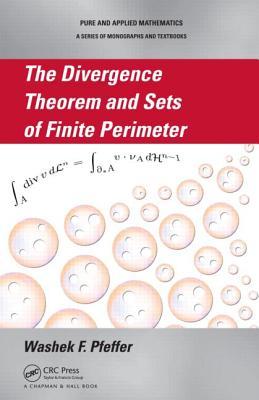
This book is devoted to a detailed development of the divergence theorem. The framework is that of lebesgue integration- no generalized riemann integrals of henstock-kurzweil variety are involved. In part i the divergence theorem is established by a combinatorial argument involving dyadic cubes.
In vector calculus, the divergence theorem, also known as gauss's theorem or ostrogradsky's theorem, is a theorem which relates the flux of a vector field through a closed surface to the divergence of the field in the volume enclosed. More precisely, the divergence theorem states that the surface integral of a vector field over a closed surface, which is called the flux through the surface, is equal to the volume integral of the divergence over the region inside the surface.
13 gives the divergence theorem in the plane, which states that the flux of a vector field across a closed curve equals the sum of the divergences over the region enclosed by the curve.
Apr 6, 2018 here is a set of practice problems to accompany the divergence theorem section of the surface integrals chapter of the notes for paul dawkins.
Free divergence calculator - find the divergence of the given vector field step-by-step this website uses cookies to ensure you get the best experience.
1, we consider (infinite) sequences, limits of sequences, and bounded and monotonic sequences of real numbers. In addition to certain basic properties of convergent sequences, we also study divergent sequences and in particular, sequences that tend to positive or negative infinity.
As always, we apply the divergence theorem by evaluating a limit as k tends to infinity. In this case we find therefore, because the above limit equals zero, the divergence test yields no conclusion.
The divergence theorem is an equality relationship between surface integrals and volume integrals, with the divergence of a vector field involved. It often arises in mechanics problems, especially so in variational calculus problems in mechanics. The equality is valuable because integrals often arise that are difficult to evaluate in one form.
Context of compact convex sets [sch93a], to the p-mixed volumes of the brunn-minkowski-firey theory [lut93], and to electrostatic capacity [jer96]. See also [sch93b] for a extensive survey on the minkowski existence theorem and its applications. 2 the divergence theorem we will now use the minkowski condition (1) to prove the divergence theorem.
Divergence theorem let \(e\) be a simple solid region and \(s\) is the boundary surface of \(e\) with positive orientation. Let \(\vec f\) be a vector field whose components have continuous first order partial derivatives.
The silverman–toeplitz theorem characterizes matrix summability methods, which are methods for summing a divergent series by applying an infinite matrix to the vector of coefficients. The most general method for summing a divergent series is non-constructive, and concerns banach limits.
We saw previous that when we combined the gradient of a scalar field with a line integral, we achieve a very useful and simple result. The line integral depended only on the end points and not on the path between the points.
A divergence measure vector field is an ℝ n valued measure on an open subset u of ℝ n whose weak divergence in u is a (signed) measure.
Graphs, level sets, vector fields, limits, continuity, partial derivatives, total derivative, derivatives, chain rule, gradient, divergence, curl, taylor's theorem, local.
Usual properties of integrals, and for which a very general divergence theorem holds.
Divergence theorem suppose that the components of have continuous partial derivatives. If is a solid bounded by a surface oriented with the normal vectors.
We will now look at some other very important convergence and divergence theorems apart from the the divergence theorem for series. Theorem 1: the series is convergent if and only if for any natural number the series is also convergent. Proof of theorem 1: suppose that is convergent, that is for some� we will proceed to prove this with mathematical induction.
The divergence theorem bounded vector fields approximating from inside relative derivatives the critical interior the divergence theorem lipschitz domains. Unbounded vector fields minkowski contents controlled vector fields integration by parts.
The first proves the existence of pure normal measures for sets of finite perime-ter, which yield a gauß formula for essentially bounded vector fields having divergence measure. The second extends a result of silhavy [19] on normal traces.
Download citation the divergence borel-cantelli lemma revisited let $(\omega, \mathcala, \mu)$ be a probability space. The classical borel-cantelli lemma states that for any sequence of $\mu.
Is the divergence of the vector field f (it's also denoted divf) and the surface integral is taken over a closed surface.
2 gives the divergence theorem in the plane, which states that the flux of a vector field across a closed curve equals the sum of the divergences over the region enclosed by the curve. Recall that the flux was measured via a line integral, and the sum of the divergences was measured through a double integral.
We prove in this paper a divergence theorem for symmetric ً0; 2ق-tensors on a semi-.
Locally bv sets dimension one besicovitch’s covering theorem the reduced boundary blow-up perimeter and variation properties of bv sets approximating by figures. The divergence theorem bounded vector fields approximating from inside relative derivatives the critical interior the divergence.
Solution: given the ugly nature of the vector field, it would be hard to compute this integral directly.
This book is devoted to a detailed development of the divergence theorem. The framework is that of lebesgue integration - no generalized riemann integrals of henstock-kurzweil variety are involved.
Since the surface integral is to evaluate outflow, the unit vector n ˆ must be the normal to ∂ v in the direction pointing out of v� the divergence theorem continues.
In this section, we state the divergence theorem, which is the final theorem of this type that we will study. The divergence theorem has many uses in physics; in particular, the divergence theorem is used in the field of partial differential equations to derive equations modeling heat flow and conservation of mass.
This all suggests that the flow integral around the surface of the larger region (the blue square) is equivalent to the integral of the curl component over the region.
Divergence theorem: curl theorem: maxwell’s equation for divergence of e: (remember we expect the divergence of e to be significant because we know what the field lines look like, and they diverge!) deriving the more familiar form of gauss’s law integrate both sides over the volume.
The fundamental theorem for the ν 1-integral on more general sets and a corresponding divergence theorem with singularities czechoslovak math.
According to example 4, it must be the case that the integral equals zero, and indeed it is easy to use the divergence theorem to check that this is the case. How to make a (slightly less easy) question involving the divergence theorem:.
Here we cover four different ways to extend the fundamental theorem of calculus to multiple dimensions. Green's theorem and the 2d divergence theorem do this for two dimensions, then we crank it up to three dimensions with stokes' theorem and the (3d) divergence theorem.
The coarea theorem provides a link between the sets of finite perimeter and functions of bounded variation.
The divergence theorem can be interpreted as a conservation law, which states that the volume integral over all the sources and sinks is equal to the net flow through the volume's boundary.
The divergence theorem and sets of finite perimeter, published by crc press in 2012 (isbn: 978-1-4665-0719-7) gives a detailed development of the divergence theorem. The framework is that of lebesgue integration --- no generalized riemann integrals of henstock-kurzweil variety are involved.
2 gives the divergence theorem in the plane, which states that the flux of a vector field across a closed curve equals the sum of the divergences over the region.
13 gives the divergence theorem in the plane, which states that the flux of a vector field across a closed curve equals the sum of the divergences over the region enclosed by the curve. Recall that the flux was measured via a line integral, and the sum of the divergences was measured through a double integral.
By the divergence theorem, the total expansion inside $\dlv$, $\displaystyle\iiint_\dlv \div \dlvf\, dv$, must be negative, meaning the air was compressing. Notice that the divergence theorem equates a surface integral with a triple integral over the volume inside the surface.
The divergence theorem, which we'll study today, relates the flux of f to the integral of its divergence.
Post Your Comments: