Read online Theatrical Topographies: Spatial Crises in Uruguayan Theater Post-2001 - Sarah M. Misemer | ePub
Related searches:
Leibniz’s theoretical spatial model of the universe as much as max herrmann’s notion of theatrical space, adolf loos’ modernist struggle against the ornament and robert venturi’s embracing of the ‘hybrid and impure’ elements of architecture have shown that the centre of theatre and architecture practice rests upon the negotiation between the spectator’s perspectival viewing of the object or performance and its distinct spatial condition of both surface and volume.
Tiffany chung (vietnam/usa) is noted for her cartographic drawings, sculptures, videos, photographs, and theater performances that examine conflict, migration, displacement, urban progress and transformation in relation to history and cultural memory.
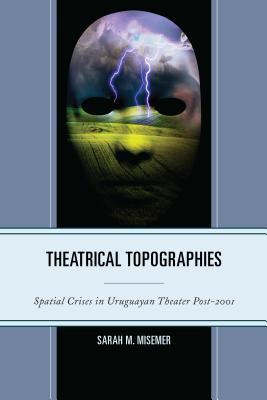
Theatrical topographies: spatial crises in uruguayan theater post-2001.
The scope of damage ample spatial causes of crises and spatial consequences). Space has not limits of the municipality, due to its relatively rugged topography.
Theatrical topographies: spatial crises in uruguayan theater post-2001 the united states must use all available tools to protect the american homeland and our people from the venezuelan dictatorship's egregious support for terrorism and narcotrafficking.
Exilio en el espacio literario argentino de la postdictadura.
The etheatre project (2010-14) comprises a series of experimental cyberformances that aim to reconsider the characteristics of theatre and the methodologies of directing theatre performances within the phenomenon of the remediation of cyberculture.
Great lengths: seven works of marathon theater great lengths: seven works of marathon theater� by jonathan kalb.
A rich body of feminist research has indeed demonstrated that spatial alienation is a constitutive axis in the construction of the female self, while women’s sense of estrangement from the everyday spaces of their lives has been shown to be related to fear, the fear that they are always watched and evaluated.
Performance and its distinct spatial condition of both surface and volume. This paper is concerned with the origin, the metaphor and rhetoric of the ‘scenographic’ in a specific time period (1680-1980) and focuses on what might be called several ‘crises’ in the thinking about architectural and theatrical space.
The human body as cultural object always has and is a performing subject, which binds the political with the theatrical, shows the construction of ethnicity and technology, unveils private and public spaces, transgresses race and gender, and finally becomes a medium that overcomes the borders of art and life.
He began his formal acting studies in montevideo at the escuela multidisciplinaria de arte dramático (emad) (formerly, escuela municipal de arte dramático) completed in 2005 and the escuela de cine del uruguay (film school of uruguay) completed in 2006.
The international community has failed to adequately invest in the development potential of agriculture, even though this is a major economic sector and the most important pathway to lift the extreme poor out of poverty and hunger, and rural economies.
Topologies and topographies of ireland's neoliberal crisis cian o'callaghan department of geography, national institute for regional and spatial analysis, national university of ireland maynooth, county kildare, ireland correspondence cian.
Spatial fixes, switching crises, and accumulation by dispossession as harvey notes, this metaphorical meaning of spatial-temporal fix as solution to it internalized production costs—only in its third (british) stage of developm.
These crises are enacted on the uruguayan stage and contextualized through networks and spatial topographies, intertextualties on the page, explorations of history and memory, and ultimately notions of identity in four areas: the postdramatic and economic realm (chapter one: peveroni), cultural geography and pyschogeography (chapter two: morena.
Theatrical topographies: spatial crises in uruguayan theater post-2001 de sarah misemer.
On the other hand, the editors hope to address what, in turn, the practice and study of theatre has to learn from the atmospheric turn across a range of other disciplines in which the features of theatre and the theatrical as aesthetic, spatial and/or social generators of atmospheres have been regularly deployed by scholars in architecture.
Request pdf on jan 1, 2018, maybel mesa morales published theatrical topographies: spatial crises in uruguayan theater post-2001 by sarah misemer.
This book on contemporary theater and performance examines how independent theater in uruguay is marked by points of crisis as shifting networks of power.
‘tokyo heterotopia” is a theatrical investigation into urban otherness in tokyo by akira takayama. The project first appeard at the festival tokyo 2013 as a theatrical performance radio tour. It then became available as a digital application on iphone and smartphone. The travelling theatre was repeated in abu dhabi, january 2019.
I examine the ways in which these technologically-altered spatial experiences in performance reclaim a specificity purported to be lost.
Another aspect of the surge in post-dramatic work is present in the aftermath of the banking crisis, in an environment where securing financial support becomes increasingly competitive.
Spatial practices aims to publish new work in the study of spaces and places which have been appropriated for cultural meanings: symbolic landscapes and urban places which have specific cultural meanings that construct, maintain, and circulate myths of a unified national or regional culture and their histories, or whose visible ironies deconstruct those myths.
Theatrical topographies: spatial crises in uruguayan theater post-2001 offers an important update to uruguay's theatre in the years following the 2001–2.
Palermo has a strategic role within the mediterranean and european context. It has social and economic relations with the african continent and the middle-east countries and reminiscence of its history as city conquered and dominated by various cultures, populations and religions, from phoenicians to carthaginians, from romans to arabs.
Simultaneously integrate an approximation of vitruvian spatial understanding. This paper will now examine various spatial conceptions that existed and proliferated during the renaissance and baroque periods. The examination will include a discussion of the form of painting known as� quadratura, as well as the various contemporary and ancient.
Post Your Comments: