Read Ehlers Danlos Syndrome with Liberty the Dog: Liberty the Ehlers Danlos Dog Liberty, an Emotional Support Dog, Helps You Explain Ehlers Danlos Syndrome to Others. - Amy Dee Hosp | ePub
Related searches:
Ehlers Danlos Syndrome With Liberty The Dog - Amazon.com
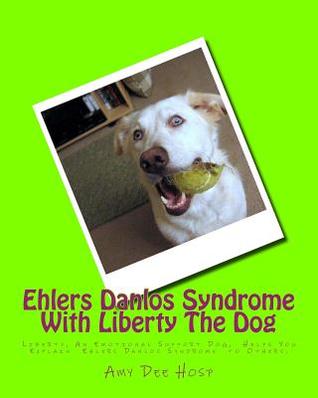
Ehlers Danlos Syndrome with Liberty the Dog: Liberty the Ehlers Danlos Dog Liberty, an Emotional Support Dog, Helps You Explain Ehlers Danlos Syndrome to Others.
Get your FREE e-book, Ehlers Danlos Syndrome With Liberty The
The Dos and Don'ts of Exercising with Ehlers-Danlos Syndrome
I Just Got Diagnosed with EDS. Is My Life Over? - Healthline
Neurological and Spinal Manifestations of the Ehlers-Danlos
The A-Z of Ehlers-Danlos Syndrome (EDS) • My Stripy Life
Oral and dental implications of the Ehlers-Danlos syndromes
Liberty the Ehlers Danlos Dog: Liberty, an Emotional Support
The Ehlers-Danlos syndromes, rare types
Neurological and spinal manifestations of the Ehlers–Danlos
Ehlers-Danlos Syndrome: The Most Neglected Disorder in
Ehlers-Danlos Syndrome and The Eyes - Ophthalmology
Ehlers-Danlos in the eye - Pacific University
The Surprising Link Between Ehlers-Danlos Syndromes & Mast
Frequent dislocation of joints may be caused by a connective tissue disorder called ehlers-danlos syndrome, which is due to a genetic mutation of the collagen in nearly each of your body’s cells. Other common symptoms of eds include muscle stiffness and tightness, popping or clicking joints when moving and clumsiness.
People with ehlers-danlos syndrome (eds) may experience bladder issues such as stress incontinence or infection. Here are some things to know about those symptoms, including how to manage them. Why does eds cause bladder issues? eds affects connective tissue, which is present throughout the body, including the bladder.
Ehlers–danlos syndrome (eds) is an inherited connective tissue disorder with different presentations that have been classified into several primary types. Eds is caused by a defect in the structure, production, or processing of collagen or proteins that interact with collagen, such as mutations in the col5a or col3a genes.
Ehlers-danlos syndrome (eds) refers to a group of 13 different connective-tissue disorders that involve a genetic mutation in collagen and connective-tissue production and structure. Connective tissues are those that comprise and support the skin, blood vessels, bones, and other organs.
Ehlers-danlos syndrome is a group of disorders that affect connective tissues supporting the skin, bones, blood vessels, and many other organs and tissues. Defects in connective tissues cause the signs and symptoms of these conditions, which range from mildly loose joints to life-threatening complications.
Ehlers-danlos syndrome (eds) refers to a class of rare genetic disorders that affect the connective tissue. These tissues give structure to the skin and organs, muscles and joints. Eds can potentially affect every system in the body, including the eyes.
And jackson, c; (2008), ehlers-danlos syndrome – a historical review. The 2017 eds international classification: your questions answered; the ehlers danlos society. Levy h; ehlers-danlos syndrome, hypermobility type, gene reviews, 2012.
Individuals with ehlers-danlos syndrome typically have overly flexible joints and stretchy, thin skin. More severe cases of the syndrome involve the walls of the blood vessels, intestines and uterus and is called vascular ehlers-danlos syndrome. One characteristic symptom of the condition is ehlers-danlos syndrome pain.
The ehlers–danlos syndromes (eds) are a mixed group of connective tissue disorders characterized by overly moveable joints, stretchy skin, and being easily damaged. Here we briefly report on problems that arise from symptoms like weakness of the ligaments of the neck, back problems, and the weakness of the protective layers around nerves.
Ehlers-danlos syndrome is a rare genetic disorder that affects connective tissues and results in flexible joints, elastic skin, and fragile tissues. There are several variations of the syndrome with each affecting a different gene and producing different signs and symptoms.
After a lifetime of misdiagnosis and doctors that couldn’t connect all the dots, i was properly diagnosed with ehlers-danlos type 3 or more commonly known as as heds and hyper – pots. After taking testing with 23andme several years ago and researching online, i came across ehlers-danlos syndrome and postural tachycardia syndrome.
Ehlers-danlos syndrome (eds) is the name given to a group of more than 10 different inherited disorders; all involve a genetic defect in collagen and connective-tissue synthesis and structure. Ehlers-danlos syndrome can affect the skin, joints, and blood vessels.
The combined prevalence of all types of ehlers-danlos syndrome appears to be at least 1 in 5,000 individuals worldwide. The hypermobile and classical forms are most common; the hypermobile type may affect as many as 1 in 5,000 to 20,000 people, while the classical type probably occurs in 1 in 20,000 to 40,000 people.
Ehlers-danlos syndrome (eds) is a group of genetic disorders that affect the connective tissues in your body, which serve to provide strength and elasticity to your body structure. Ehlers-danlos can affect your skin, joints, and blood vessel walls; the syndrome is characterized by extremely flexible joints and very stretchy, fragile skin.
Ehlers-danlos syndrome (eds) is a collection of genetic disorders that affect connective tissue. People who have eds have problems with their collagen, a protein that adds strength and elasticity to connective tissue. This faulty collagen affects many body parts, including skin, muscles, ligaments and joints.
The ehlers-danlos syndromes comprise a clinically and genetically heterogeneous group of heritable connective tissue disorders, which are characterized by joint hypermobility, skin hyperextensibility, and tissue friability.
The ehlers-danlos syndromes (eds) are a group of thirteen individual genetic conditions, all of which affect the body's connective tissue.
The major types of ehlers-danlos syndrome are classified according to the signs and symptoms that are manifested. Each type of ehlers-danlos syndrome is a distinct disorder that “runs true” in a family. An individual with vascular ehlers-danlos syndrome will not have a child with classical ehlers-danlos syndrome.
Oct 23, 2019 ehlers danlos syndrome with liberty the dog is a book written by amy dee hosp where the dog who has the same genetic disorder called.
Kyphoscoliotic ehlers-danlos syndrome (eds) is caused by changes (mutations) in the plod1 gene, and, rarely, in the fkbp14 gene. This gene gives the body instructions to make (encodes) an enzyme that helps process molecules that allow collagen to form stable interactions with one another.
It can be easily misdiagnosed due to the number of symptoms it may include.
Ehlers-danlos syndrome (eds) is a group of disorders involving connective tissue. Connective tissue is what provides the body support, structure, stability and normal scar formation. Most people with eds have loose joints, sometimes called “double-jointedness.
The effects of ehlers-danlos syndrome can be multi-systemic, which means shoddy connective tissues can cause problems in various parts of the body. Everything including the eyes, jaw, heart, gut, mouth, joints, spine, and skin can be affected.
The ehlers-danlos syndromes (eds) give rise to a spectrum of features affecting the mouth that may lessen quality of life. Additionally, routine dental care has the potential to be compromised as a consequence of some of the systemic features of the disease.
Her professional work in the last 10 years has centered on ehlers–danlos syndrome. She is director of adult genetics and of the ehlers‐danlos society center for clinical care and research at the harvey institute for human genetics, and associate professor of medicine at johns hopkins university school of medicine.
Ehlers-danlos syndrome, arthrochalasia type, is an extremely rare, inherited disorder caused by abnormalities in collagen formation.
Ehlers-danlos syndrome is a group of inherited disorders that affect your connective tissues — primarily your skin, joints and blood vessel walls. Connective tissue is a complex mixture of proteins and other substances that provide strength and elasticity to the underlying structures in your body.
Ehlers-danlos syndrome genetics of ehlers-danlos syndrome; the merck manual for health care professionals provides information on ehlers-danlos syndromes. Mesh® (medical subject headings) is a terminology tool used by the national library of medicine.
Ehlers-danlos syndrome is a group of disorders that affect connective tissues supporting the skin, bones, blood vessels, and many other organs and tissues. Defects in connective tissues cause the signs and symptoms of these conditions, which range from mildly loose joints to life-threatening complications. The various forms of ehlers-danlos syndrome have been classified in several different ways.
The complications of some types of ehlers-danlos syndrome can be life-threatening. Some types, including vascular ehlers-danlos syndrome, can cause blood vessels to rupture (tear). When this happens, it can lead to dangerous internal bleeding and stroke. People with these types of ehlers-danlos syndrome also have a higher risk of organ rupture.
In the ehlers-danlos syndromes stretch marks may appear from an early age at multiple atypical sites such as the elbows, chest, under the arms, and on the inner thigh. It is usually caused by a gene mutation in the col3a1 gene affecting a major protein.
Who gets ehlers-danlos syndrome, arthrochalasia type? (age and sex distribution) ehlers-danlos syndrome, arthrochalasia type is a very rare disorder. Thus far, only about 30 cases have been reported in the scientific literature; a manifestation of the disorder may begin at birth, and the condition continues to progress/develop over time.
Liberty the ehlers danlos dog shares a genetic disorder with her owner called ehlers danlos syndrome. This is liberty's story about what it is like to live with eds and how she, an emotional support dog, helps her owner.
Ehlers-danlos syndrome (eds) is the term used for a group of genetic disorders of connective tissue that are characterized by skin hyperextensibility, joint hypermobility, and/or tissue fragility� the management of patients with eds depends largely upon common principles and practices, with an emphasis on patient education for the prevention.
Ehlers-danlos syndromes are complex and multisystem diseases with clinical symptoms that vary depending on the type of collagen altered. And although ehlers-danlos syndromes mostly affect the joints and skin, the severity of the defects in the connective tissues range from mild discomfort to life-threatening.
On one hand, you have to do it: exercise is the best treatment people with eds have for an otherwise untreatable condition. On the other hand, people with eds have to be very careful about which exercises they participate in to avoid injury, and often experience pain during the workout.
What others need to know about the special needs of someone with eds when that are at play or participating in sports.
Aug 18, 2020 ehlers-danlos syndrome is a group of disorders that affect connective tissues supporting the skin, bones, blood vessels, and many other.
Ehlers-danlos syndrome is a group of genetic disorders that affects the body’s connective tissue. Its key characteristics are stretchy skin and flexible joints. Many people with eds experience other symptoms, such as chronic pain, fatigue, easy bruising, poor wound healing and abnormal scarring.
Ehlers-danlos syndrome is the name of several inherited medical conditions that affect joints, skin, and other connective tissues in the body. Ehlers-danlos is usually the result of a mutation or defect in the genes that produce and regulate collagen—the primary protein making up connective tissue in the human body.
Extremely loose joints, fragile or stretchy skin, and a family history of ehlers-danlos syndrome are often enough to make a diagnosis. Genetic tests on a sample of your blood can confirm the diagnosis in rarer forms of ehlers-danlos syndrome and help rule out other problems.
The committee on cardiovascular dysautonomia of the international ehlers–danlos syndrome consortium met by teleconference or through electronic correspondence throughout 2015 and 2016 to discuss the associations of cardiovascular autonomic dysfunction with heds and its assessment and management.
Post Your Comments: